The impact of commissioning on general practice

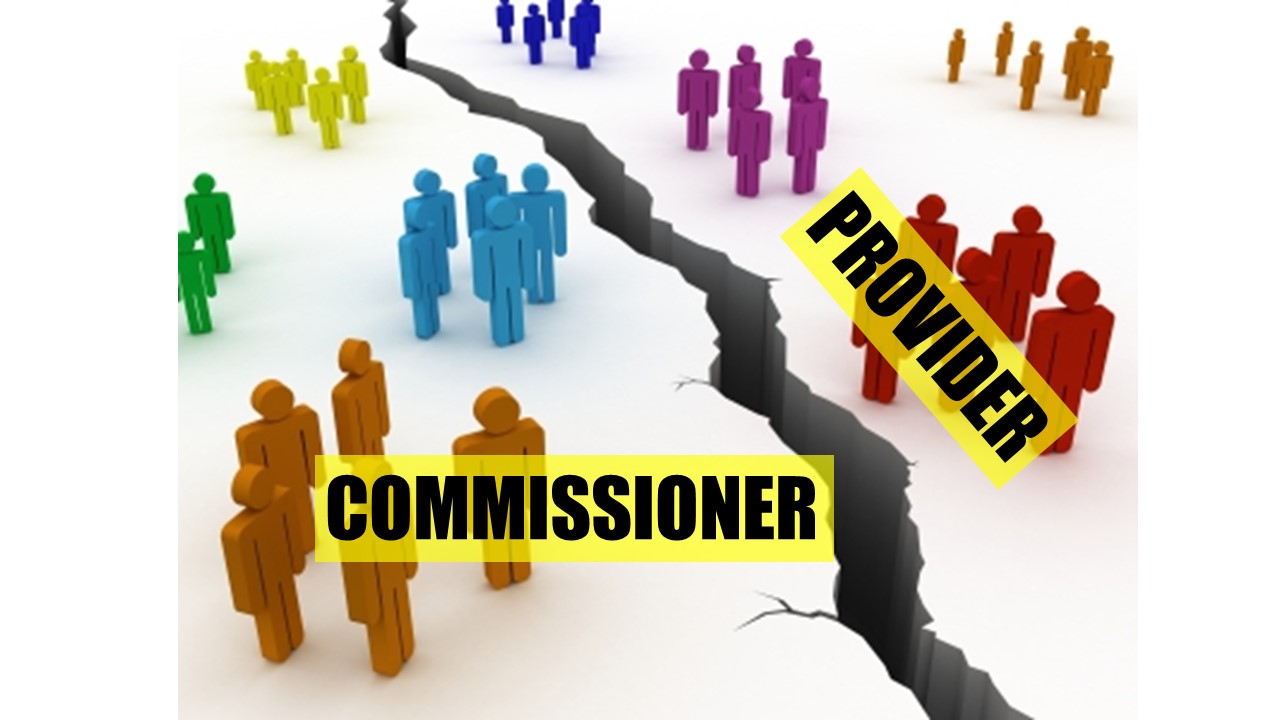
At an appearance before the Commons Public Accounts Committee in February this year, Simon Stevens signalled the end of the purchaser provider split, indicating that the development of accountable care organisations by STPs would dissolve historical boundaries between commissioners and providers.

These boundaries were first established by the NHS and Community Care Act in 1990. Even then two types of “purchasers” were created: Health Authorities, and general practice through fundholding. Fundholding was abolished by Tony Blair and the new labour government in 1997. Instead, Primary Care Groups and then Primary Care Trusts emerged, with GPs given a voluntary role through practice based commissioning. This voluntary role became compulsory in 2013 with the establishment of CCGs.

The commissioner/provider split has always been an artificial one, particularly for general practice. It was introduced to create a healthcare market, based on the theory it would create value for money by purchasers shopping around for care provision. But the requirement to sustain existing providers, the creation of perverse incentives to increase activity, and transaction costs not being matched by innovation has led many, including it seems Mr Stevens, to the conclusion it just does not work.

The entire commissioning “experiment” has not served general practice well. Divisive at first (e.g. fundholding vs non-fundholding practices blamed for creating a two tier system for patients), a “primary care led NHS” became one of the mantras of the late 1990s and 2000s, using the public trust of GPs to soften the blow of a nominally left-wing government maintaining the internal NHS market. With the advent of CCGs, all practices were mandated to become part of the commissioning system. All practices were to become both providers and commissioners of care. Conflict of interest regulations were developed to manage this dual role, which became increasingly cumbersome over time. In turn, practices had to split their leadership resources, energy, focus and talent between these commissioner and provider roles.

This happened at a point where the profession (as providers) was plunging into crisis. Ironically, the boundaries between the commissioning and provision roles of GPs left them powerless to use their position as commissioners to ensure the required shift of resources into the provision of general practice actually took place.

And now the purchaser provider split is to end. What does this mean for general practice? Most obviously it means the role of local GP commissioners will be side-lined, to be replaced by providers working together in accountable care systems. However, this shift will evolve locally, meaning GPs will continue to expend effort, time and energy into commissioning, while providers develop a new future.   The artificial split between commissioning and provision enforced upon practices in 2013 is to be abandoned, but not yet.

General practice as providers, however, are to be included in the development of accountable care organisations. But not as individual practices. Instead they need some at-scale representation. Here general practice is at a real disadvantage. Some of its limited pool of leaders, talent and energy remain tied up in CCGs. At-scale organisations in some areas do not even exist, and in many areas are new, and not really able to partner as equals with established local hospitals and the like.

There are, however, opportunities. The capitated based budget systems for accountable care organisations may incentivise systems to strengthen general practice, and remove the incentives for growth in secondary care activity that the internal market has generated. The removal of the artificial commissioner/provider split for general practice is an opportunity for the profession to become “whole” again with a much clearer identity. And for all their ills, CCGs have enabled a cadre of GP leaders to gain system leadership skills over the last 4 or 5 years, that can be deployed by the profession within the new care delivery systems.

Making the most of these opportunities requires action. The world is changing quickly, and in many places general practice has been slow to respond. The cohesion of practices attempted (but often never really achieved) by CCG locality structures and the like needs to be delivered by practices themselves. A strong, single voice is required. Practices need to ensure they are around the STP and accountable care “table” as providers, represented by their best leaders. In some places it will need early decisions by GP leaders to move out of the commissioning arena to focus on provision.

The purchaser/provider split has not served general practice well, but it is coming to an end. It is time to draw a line under it, to focus time and energy solely on the provider role, and to build a strong future for general practice in the post-commissioning world. Lack of action now, however, could lead to a new (albeit different) set of problems that may pose a more fundamental challenge to general practice in the future.

General Practice in 10 Years’ Time – Part 3

This is the third in the series of blogs where Ben asks the questions that he believes will shape the future of general practice. This week he asks

What Role Will Federations Play?

As with any look into the future, dipping into the past is a good place to start. Federations have changed significantly over the last ten or even twenty years. Post fundholding, and during the practice based commissioning years, federations were set up primarily to deliver services historically provided in hospital, in the community in order to generate an additional income stream for GPs and practices.

Since then, two things have materially impacted on the role of federations. First is the crisis that has engulfed general practice. Where federations historically operated at arm’s length from practices, they now have an important role in supporting member practices through the current challenges. This is a critical difference. It means the activities federations undertake are much closer to the delivery of core general practice e.g. visiting services, delivery of extended access, employing pharmacists and other new roles for practices. They have to work hard to ensure the cost of the additional layer of administration is offset by the value they bring to their members.

Second is the rise and fall of CCGs. At their inception they gave a powerful voice to general practice, as arbiters of how the NHS pound would be spent. No need, then, for federations to take on this role. Indeed, where they tried to assume this role, GPs were herded in and out of rooms to satisfy increasingly confusing conflict of interest requirements. But now power is shifting away from CCGs and away from commissioning. As CCGs get bigger, the local GP voice is getting smaller. As STPs and accountable care systems develop, the influence of general practice via commissioning continues to diminish.

Suddenly, we have a really clear role for federations: to support local practices to meet their current (and growing) challenges and to provide a strong voice for general practice as local systems move towards integrated models of working. Whereas in the past federations were something of an optional extra, it no longer feels like that. The challenges facing general practice and the wider integration agenda require an ability for practices to function coherently as a collective.

Federations provide that acceptable middle ground, where individual units can retain the independence and individuality they prize so highly, while at the same time gaining the benefits of joint working. They provide a vehicle for collective voice and collegiate working without necessarily requiring wide-scale restructuring into larger, formal organisations. Where trust levels grow between practices, and the ambitions for working together become greater, some are starting to move beyond loose federations into more formalised joint working arrangements, such as super practices.

Federations will play a key role in the development of general practice into the future. Where they are successful, owned by and adding value to practices while at the same time leading them through the integration agenda, they may well evolve into more formal partnership structures. Where leadership is weak and trust levels remain low, they may fall by the wayside, most likely to be taken over by more successful groups seeking to expand their footprint. Either way, we are already seeing well-developed federations able to play a leading role in local system integration plans. Moving forward, federations will have a critical role in both supporting the transformation of general practice into new sustainable ways of working, and shaping the role general practice plays within accountable care models and systems.

General Practice in 10 Years’ Time – Part 2

In the second of his blogs looking at the questions that will determine the future of general practice Ben asks

At What Scale Will General Practice Operate?

I find the answer “general practice needs to operate at greater scale” often precedes the question. Indeed, in many cases there is no sign of a question, it is simply presented as a statement of fact, as though 70 years of effective working at the current scale counts for nothing and there is no need to even make a case to support the statement.

As I have previously been at pains to point out, scale does not, of itself, automatically generate benefits for general practice. We only need to look at the graveyard of federation failures to know this to be true. Equally, the Nuffield Trust report “Is Bigger Better?” found instances where the quality of general practice reduced with increased size.

The authors of that report ultimately felt scale was better for general practice, but only where it is led by high quality leaders who understand the value general practice provides and work hard to preserve it. I have been fortunate enough through the podcast to be able to discuss with some of those leaders the rationale that sat behind their move to scale. What is striking is how different those rationales are. This is important, as it means there is not a single basis for general practice operating at scale. Further, it is the rationale for operating at scale that ultimately determines the answer to the question of at what scale general practice should operate.

There are seemingly two ends of the spectrum. At one end, the question is, “how do we create the efficiencies, voice and shared infrastructure to preserve and strengthen independent general practice”? This, for example, is broadly the question the super-practice Our Health Partnership (OHP) is seeking to answer.

They believe the optimum population coverage for their model is c500,000. This is based on each member practice contributing £2 per head, which creates a £1m budget to fund a management team. This is the size they believe is necessary to deliver real value. What is impressive about the model is it is maintaining a focus on working for the member practices (efficiencies), while at the same time creating a strong position within the local STP (voice).

At the other end of the spectrum, proponents of NAPC’s primary care home model advocate strongly for a population size of 30-50,000. Here the question is, “How can general practice really understand and best meet the specific needs of local communities, and retain and build on the sense of belonging that local communities have”? They believe if general practice operates beyond that size it cannot maintain the personal relationships fundamental to its success. Local needs vary so much that a service providing an average of the needs of two communities is in fact not meeting the needs of either.

Of course these two perspectives are not mutually exclusive. OHP want to build their organisation around specific geographical localities. Nav Chana, GP Chair of the NAPC, is clear a bigger population size might be required to create the infrastructure needed for these individual primary care home sites to deliver.

Futures are journeys not destinations. Beacon Medical Group is a great example of a practice on a journey. Already at 30,000, they have plans to scale significantly beyond that. But they understand what is important about general practice is continuity of care, and the ability for local areas to tailor services to the needs of their local population. So as they grow they are building on units of around 30,000, each with some degree of local freedom. Imposing a one size fits all operating model is not, in their view, going to work, even within a single practice.

General practice may be heading to a place where it operates at a large scale (over 100,000 population, maybe higher than 500,000) to create the new infrastructure it requires, while at the same time finding a way to retain some level of autonomy at individual locality level (30-50,000 population). But this concept of the journey, like the one that OHP and the Primary Care Home sites and Beacon Medical Group are all on, is the one that Rebecca Rosen and the authors of the “Is Bigger Better?” report believe to be critical. The most important question is not what size general practice is going to be, but rather how it is going to get there.

If you’d like to find out more about the future of general practice and meet some of the key voices in contemporary general practice (including Mark Newbold from OHP, Nav Chana Chair of the NAPC and Jonathan Cope from Beacon Medical Group) then why not buy a ticket to our first General Podcast LIVE event? For more information including a full programme and how to buy tickets visit our website here.

General Practice in 10 Years’ Time – Part 1

This is the first in three linked blogs where Ben poses three questions that, taken together, will paint a picture of the future of general practice. In this blog the question is:

Will General Practice Remain Independent?

When thinking about what general practice will look like in ten years’ time, one of the questions that immediately springs to mind is whether it will remain independent. Will general practice (finally) become a full-blown part of the NHS, or will it continue in its current peculiar position of half in and half out.

First off, what does independence mean? While the average person on the street considers general practice to be an integral part of the NHS, the description of general practice as independent comes because practices (in the vast majority of cases) are not run by NHS organisations, but by independent organisations (usually GP partnerships) that contract with the NHS.

Is this just a technical difference? Well not really. It means GP partners can choose what they do, which contracts they will enter into, and which they won’t. They can invest in property, form partnerships, decide on their staffing model, and choose how they will operate. They are bound by the constraints of the contracts they enter into, and more recently by CQC regulations, but they retain a level of autonomy and freedom of decision making not available to those working more directly within the NHS.

The opportunity for practices to give up this independence has become much more real recently, since the publication of the GP Five Year Forward View and the emergence of the new models of care. These new models provide what is described as a “fully integrated” option whereby practices can transfer their contract into the new multispecialty community providers (MCPs) or primary and acute care systems (PACS), and the GPs can become salaried employees within the new larger organisations.

Will practices take this opportunity to give up their independence, and if so why? On the podcast, I have asked this question to some of those involved in the new models of care. They explain some will, and the primary reason is the pressure general practice is currently under. For some the workload, financial and leadership pressures have become too great, and focussed on too few individuals. When presented with a way out, they are eager to take it.

For other GPs there is more of a strategic sense that general practice cannot continue on its own. They feel that to thrive into the future and to best serve local communities, general practice needs to work as part of a wider team. They see the future of general practice as no longer being small, independent businesses, but instead operating within a new style of NHS organisation that harnesses the benefits of full membership of the NHS (indemnity, VAT exemption etc), of scale and of fully integrated clinical teams.

But large organisations in the NHS do not have a strong track record of maximising the benefits of scale, of enabling effective multi-disciplinary working or of innovating around the needs of patients. If GPs have learnt anything from the rise and fall of CCGs, it is that the statutory world of NHS stifles rather than enables, creates bureaucracy rather than removes barriers, and controls rather than empowers.

As a result, some prize the independence of general practice much more highly, and are much less willing to give it away. Our Health Partnership (OHP) is a “super practice” with a population of over 200,000 that aims to demonstrate it is possible for independent general practice to thrive into the future, by operating at greater scale. What they, and others like them, are already showing is the choice to remain independent or not is real for general practice, and while changes might be necessary to preserve it, there is certainly no inevitability it will be taken from them.

To thrive into the future, general practice has to change. While some cling to the status quo as a “tried and tested strategy”, the reality of the changed political, social and economic environment is change is necessary. General practice has to operate at greater scale, to manage risk, deliver greater efficiencies, build partnerships and have a strong system voice. But independence is something general practice can choose to keep. Whether or not it will do so I suspect will largely depend on how actively it works at redesigning itself, or the extent to which it allows the system to determine its future form.

If you’d like to find out more about the future of general practice and discuss these issues and many others with Ben and a range of expert GPs then why not buy a ticket to our first ever General Podcast LIVE event next March. You can find all the relevant information and book your ticket here.

The Future of General Practice – Have Your Say

Here at Ockham Healthcare, the question we have been giving most thought to is what the future of general practice will be.

We asked Mark Newbold what he thought the biggest change to general practice would in the next 10 years. Find out what he said here. We will be asking the same question to a whole range of people over the next 6 months, in an attempt to build a picture from a variety of perspectives as to what the future will hold.

We also want to ask you the question. We want you to be part of the debate. We want to know what you think the future of general practice will look like in 10 years’ time. Do you think independent general practice will still exist? If not, what do you think will be in its place? Will the role of the GP have changed, and if so what will they be doing? Will technology have transformed the way patients and GPs interact? Will the registered list even still exist on a local basis? Will we have moved all the way to 10 or 20 large providers of general practice? Or will the profession have been subsumed within acute hospitals, community trusts and the nascent accountable care organisations? Or will it be exactly the same as it is now?

These are important questions. Each practice is regularly faced with decisions about its future. GPs have to determine how much autonomy to give up to federations and networks, and how much to retain for themselves. Commissioners have to choose how to invest the GP Forward View money in general practice for best effect. Everyone has to work out how to cope with the falling numbers of GPs.

A clear vision of the future will help. At present, there isn’t one. If general practice knows where it is going, it is more likely to be able to control its own destiny, to make the right decisions today that will impact tomorrow, and to build for the future instead of protecting the past.

Be part of the conversation. Tell us what you think. We literally want to hear your voice. You can do this in a number of different ways. Either record your views on your phone or ipad or computer, and send the MP3 file to me, Ben Gowland, at ben@ockham.healthcare, or we can set up a 5 min Skype call where we can record what you think, or just email me and we will work out a way to do it!

We will be bringing all of the different thoughts and thinking together at our conference in March next year. Get involved now, so that we can shape the future together!

Page 74 of 89
1727374757689