

• Home
  • Who We Are
    • Our mission
  • Our Services
  • Blog
    • Blog Index
  • Podcast
    • Podcast Index
  • Resources
    • Coaching Resources
    • PCN Plus Conference: The Future of PCNs 2026
    • TV documentary
    • The Future of General Practice: Book
  • Contact Us

No products in the basket.

  • Home
  • Who We Are
    • Our mission
  • Our Services
  • Blog
    • Blog Index
  • Podcast
    • Podcast Index
  • Resources
    • Coaching Resources
    • PCN Plus Conference: The Future of PCNs 2026
    • TV documentary
    • The Future of General Practice: Book
  • Contact Us

29
sep
0

5 False Assumptions About Multi-tasking And How To Stop.

Posted by KCastilleChange, Coaching Tips, Leadership, Leadership and Change, Self-coachingNo Comments

OK, we have all either heard or said it… “women are better than men at it”, and “she’s a mother so she multi-tasks with consummate ease”.

However, asking whether men or women are better at multi-tasking is the wrong question.  Instead, the smart question is: should you be doing it at all?  Is it better to do several tasks or activities simultaneously, or should we concentrate on doing one thing at a time?  To answer this, we need to understand the risks and benefits of so-called ‘multi-tasking’ (more on this later!) to help us choose whether we should do it or not.

It feels like a good use of time when we do it, e.g., reading whilst watching TV, answering emails whilst on a zoom call and, my husband’s favourite, ironing whilst watching ‘Match of the day’!

In today’s fast-paced world, we are all super busy.  It has become increasingly difficult to balance work and family life in a way that satisfies you, your boss, and your loved ones.  We have been duped into believing that multi-tasking is the answer to our lack of time.  Worse still, somewhere along the way we have created heroes out of those who multi-task.  We have adopted the notion that doing more than one thing at a time increases efficiency and frees up time in our home and work lives.

somewhere along the way we have created heroes out of those who multi-task

But how true are our assumptions?  Is multi-tasking (or multi-switching, which is what you are actually doing) a good thing and can you really save valuable time?  To help you decide, this blog busts a few myths and exposes some of the hard the truths about multi-tasking.

Five false assumptions:

1.  Our brain can easily do several tasks at once.

Despite our belief that we can do several things simultaneously, studies from neuroscience and psychology suggest that our brains do not multi-task!  Instead, the brain rapidly switches from one task to the other (multi-switching).  This happens so quickly that we barely notice the shift.

2.  We get more done when we multi-task.

The myth here is that when we multi-task, it makes us super-efficient and more productive.  But the reality is, switching from one task to another causes more mistakes.  We think we are being productive when we are, in fact, more likely to be doing the task badly or making mistakes and creating more work.  Studies suggest that multi-tasking can reduce productivity by as much as 40%.

3.  We save time by multi-tasking.

As well as being less efficient, multi-switching between tasks takes more time in the long run.  We lose focus on the task we stop doing and then take longer to recover our focus on it when we return to the previous task.  This results in wasted time.

4.  We can focus on several things at once.

Rather than do several tasks simultaneously, the brain focuses on one thing at a time.  When another task is presented, the brain rapidly shifts attention from the first thing to the other.  This is emotionally and intellectually exhausting.  It spreads your attention thinly which increases your error rate, drains your energy, and reduces your ability to think clearly.

5.  We can rapidly recover focus when we switch from one task to another.

Cognitive studies from psychology have looked at how we process specific information in our environment.  The fact is, we cannot easily or rapidly regain focus.  You will have noticed this phenomenon when, for example, you ask someone a question whilst they are looking at their phone, computer, or reading something.  They are in effect ‘tuned out’.  Their attention is focused on a particular thing, causing them to momentarily block out other input.  When you ask them a question, their response is often slow or delayed and may start with “erm…”, “sorry” or “what?”.  Even if they are asked a relatively simple question such as “what’s for dinner?” it evokes a delayed response if the person being asked is focusing on something else.

What prudent people do

My message is undeniably tilted towards advising you to avoid multi-tasking when possible.  This is especially true when a task is important and has the potential to yield either positive or unwelcome consequences.

Hence, it is only fair that I offer some ways to manage the multiple tasks that you are probably juggling every day in your life.  Here are a few suggestions…

  • Have a short daily to-do list (and stick to it) which limits the number of things you will do in a day. Tick off things as you complete them – your brain responds positively to this by releasing positive hormones which help you feel good.
  • Work for a maximum of 20 minutes at a time and then take a short break (this has been shown to increase productivity).
  • Ensure you know which items/tasks are the most important ones and prioritise these.
  • List things that you will stop doing and either drop or delegate trivial tasks or duties.
  • Avoid distractions (switch off or mute your devices) and stick to your list.
  • Plan a reward after completing something you dislike doing or something that is difficult.  Even small rewards increase motivation.
  • Ensure that there are some things on your to-do list that bring you joy or fulfilment.

A variety of studies have confirmed that our ability to do more than one task at the same time is limited and can be detrimental to the quality of work produced.

People who believe that they get more done by doing several tasks at once are misguided.  They achieve less than they would if they focused on one thing at a time.  When your attention is divided or interrupted, you are much more likely to make mistakes.

Returning to my husband’s multi-tasking trick (ironing and watching football on the TV), he relies on the action replay or the opportunity to rewind to see the goals he missed whilst concentrating on the ironing (burning the clothes carries hefty consequences)!  However, in life, we rarely have the privilege of an action replay or rewind.

If you need to focus on an important task, do that task and nothing else.  Make sure the people around you know that you do not wish to be interrupted.  And, probably hardest of all, switch off the devices that you are not using for the task.

Stop making multi-tasking a heroic act.  Instead acknowledge the shortcomings of doing it and try my suggestions above to help you through your busy day.
1
jul
0
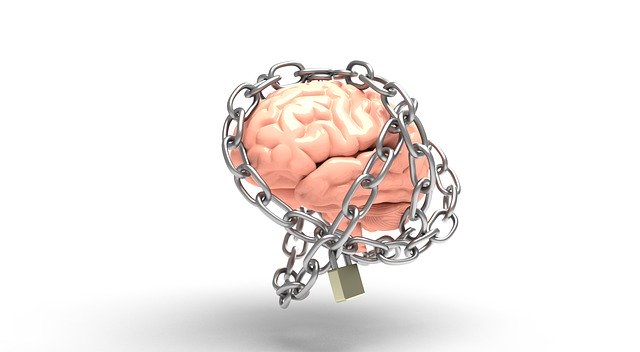
Image by 3D Animation Production Company from Pixabay

The number 1 culprit of low self-confidence and how to fix it

Posted by KCastilleCoaching, Coaching Tips, Leadership and Change, Self-coaching, WellbeingNo Comments
(Image by 3D Animation Production Company from Pixabay)

Is your lack of confidence letting you down? 

You know those days, months or even years when you doubt your ability to accomplish something?  Interestingly, you are not alone.  Whether you are a board executive or a stay-at-home parent, no one is immune.  My clients range from CEO’s and VP’s in global companies, through to jobbing doctors and nurses.  They have taught me that insecurity affects everyone at times. 

“Doubt kills more dreams than failure ever will” – Suzy Kassem

In fact, feeling a lack of confidence is so common, I decided to write a longer piece on the topic.  To give you time to practice the ideas, I have split the article into two bite-sized chunks, each with life-changing impactful actions that you can start working on today.

This article covers the main factor responsible for low self-worth and self-confidence, and how to deal with it.

A second article on self-confidence will be published next month and will help you to build on what you learnt from this one and offer 7 more ways to increase your confidence and self-worth.

If you don’t want to miss Part 2, subscribe to the monthly newsletter at Karencastille.com and the link to both articles will be in the newsletter.

What is confidence and why is it important?

Although somewhat nebulous, the term ‘confidence’ suggests an inner feeling of self-belief and self-worth.  When you feel confident, despite life’s challenges, you feel secure and capable rather than insecure.  You readily accept and tolerate your vulnerabilities and insecurities especially in relation to feelings of failure or rejection.  You are honest and frank with yourself about your feelings, emotions and capabilities.

When you are self-confident, you trust your own judgement and ability.  This does not mean that you always succeed but, remarkably, it does improve your chance of success at whatever you are trying to achieve.  And, if you do fail at something, when your confidence is resolute, you are more able and willing to brush aside the failure and either try again or take on a new challenge.  Confident people are intuitively able to channel their confidence to handle any outcome, positive or negative, regardless of what they pursue.

Can you learn to be more confident?

The short answer is yes and that is why it merits two articles!  However, it is a bit like the chicken and egg situation i.e. which of two things comes first, and which caused the other one?  In this situation, you need to be confident to try something new or challenging and each time you do try something new (and survive!) it builds your confidence.

This is because when you try something new, it always feels like a risk.  With risk comes stress.  When we are stressed our brains trigger stress hormones which can make us feel uncomfortable or afraid of failure.  However, in short bursts, the same stress hormones can also help us to think clearer and perform better.

This may not be what you want to hear but, unrestrained negative thoughts (about yourself) and negative self-talk perpetuate low self-worth and self-confidence.  Therefore, the main culprit for undermining your confidence is you!  The moment you acknowledge this and take personal responsibility for improving it, your confidence will begin to increase.

Re-frame your negative thoughts

Watch your language!  Although it may not feel like it, what you say to yourself is entirely within your control.  To protect us, our brains are hard-wired to look for negative things.  So, it is easy to slip into an irrational cycle of negative thoughts and moods.  When your thoughts about yourself are mostly negative, you are unconsciously undermining your own confidence.  Once you are aware that you are doing this, there are several things you can practice to overcome it.

  1. Learn to recognise – in the moment – when you criticise or belittle yourself.  I sometimes do this when I am playing tennis.  I can hit 4 successive great shots, mess up the next one then mutter (to myself) that I am rubbish!  Instead, I should be recalling, and praising myself for, the good shots I made.

  2. Change your belief about yourself. The power of belief is a well-known phenomenon.  What you think about and say to yourself (good or bad) becomes a self-fulfilling prophecy.   The result of berating ourselves is that we act according to our negative belief.  Fake it until you make it!

  3. Stop telling yourself and others that you lack confidence!  Each time you say it you are inadvertently reinforcing it as your belief.  By speaking and thinking positively about yourself, and taking action to achieve improvements, you will develop confidence.  A better phrase to practice is “I am continually building my confidence”.

When you catch yourself saying negative things to yourself, in the moment, stop saying the negative things and replace the comment with a positive one which focuses on what you did well.

Conclusion

Noticing what you think and say to and about yourself is the first step to improving your confidence.  When you become more self-aware of your inner chatter, you can begin to re-frame the conversation to a more positive one.  With practice, over time, you will improve your feelings of self-worth and self-confidence in different aspects of your life.

As my tennis coach frequently reminds me; practice, practice and practice some more if you want to achieve improvement.  Once you begin to master the suggestions in this article, a second article on the same topic will be published in a month’s time.   It will provide you with another 7 practical ways to help you to continue on your improvement journey.

If you don’t want to miss Part 2, subscribe to the monthly newsletter (on the right-hand side of this page) and the link to both articles will be in the newsletter.

Karen


19
feb
0
Hope

Hope is not a plan: 3 steps to make hope work for you

Posted by KCastilleChoice, Coaching, Coaching Tips, Leadership, Leadership and Change, Self-coachingNo Comments

Are you waiting, hoping, or even praying for something good to happen?  Something that will change your life for the better?

Maybe you’re hoping for a new job, a promotion or a new career?

Or, perhaps you are hoping to get fit, lose weight or improve your work-life balance?

Hoping something will change or happen is rather like daydreaming, wishing or wanting something.  The trouble with hope is it is only part of the story and will only get you so far. 

Nelson Mandela hinted at the concept of ‘hope’ when he talked about vision.  He famously said:

 Vision without action is merely daydreaming

Creating a vision for a more positive future is similar to hoping for something.  Consequently, ‘hope’ without action is also merely daydreaming. 

I don’t want to mislead you with an entirely negative portrayal of ‘hope’. Being hopeful can feel highly positive.  However, this only holds true if you know how to optimise your hopefulness and convert it into reality. 

How to make ‘hope’ work for you.

Hoping for something can be motivational and inspire you to take positive action towards whatever you are hoping for.  This is easy to see when, for example, we plan a house move, a wedding, or a holiday.  We become excited about it and this compels us, almost inadvertently, to take steps towards making it happen.

You can make hope work for you by, firstly, visualising what you hope for.  The effect of this is so powerful that your brain releases positive neurochemicals (such as dopamine and endorphins) which intensify your motivation as well as making you feel good.

Astonishingly, neuroscientists have found that when you recall or imagine a positive experience, the effect is almost as potent as when you do it for real.  It positively affects your sense of well-being, even though it is only in your thoughts!

So how do you convert your hopefulness into a powerful vision that compels you to act and achieve what you hope for?

How to visualise what you hope for

Imagine for a moment how you feel when you think about (or visualise) an upcoming holiday.

Picture the wonderful things you will see, feel and experience.  Imagine how will you feel when you leave your stresses behind and enjoy a break from the worries and pressures of everyday life.

To make it really work for you, visualisation needs detail.

Conjure in your head the images, smells, sounds, feelings, colours etc.  If it is a holiday (for example) you’re hoping for, picture the beautiful sights you will see.  The blue sea, white sand, the snow, the mountains, the lakes, the trees or whatever it is that attracted you to the holiday in the first place.  Imagine the sun warming your skin, the sand between your toes or the taste of the cocktail as you watch the sun set.  Feel the snow crunching under your boots, the frost on your nose or the swish of your skis as you glide down the beautiful mountain slope. 

Most important of all, think about how you will feel when you achieve what you hope for.

You will start to feel real feelings.  You will probably feel excited, relaxed or happy just by the thought of it, even though you are only thinking about it rather than actually doing it. 

People who market and sell holidays know this.  That’s why they bombard us with images of stunning sunsets, beaches, forests, mountains, happy people and so on.  They are using images, words and sounds to create a ‘feel-good factor’ every time we look at their website, brochure, or video.

Hence, ‘hoping’, day-dreaming, desiring, visualising – however you wish to describe it – can make you feel mentally and physically good.

Sadly though, as soon as we put the brochure down or close the website and return to our daily tasks, the positive feelings subside.

The question then, is how do we make the feel-good mood last?

How to keep the feel-good factor going.

Mr Mandela inspired us to dream.  He also knew how to maximise hopes and dreams.  In the last part of his speech he said…

Vision with action can change the world

Changing the world is a mighty big ambition!  Your hopes and dreams may not be quite as far reaching.  Nonetheless, whatever you hope for is within your grasp.  Research has shown that to achieve even a giant-sized, scary, ambitious goal, you are more likely to succeed if you take lots of small steps or actions which feel doable and achievable.

Every time you complete an action – no matter how small – it will make you feel good and you will be one step closer to converting your hopes and dreams into reality. 

Day by day, step by step, you will move closer towards that which you long for.  So, in conclusion,

These 3 things will make hope work for you:

1.  Visualise what you are hoping for – in detail.  Imagine what you will feel, see, hear, smell, taste?

2.  Take small steps (actions) today to get you closer to what you hope for?

3.  List the next steps – and when you have completed those, list the next ones, and so on until you get there.

You may not be aiming to change the world.  But you can use your hopes and dreams as a positive force for change.  Use it to frame and motivate yourself to take positive actions towards your desired outcome.

Be inspired by Mr Mandela.  Begin to convert whatever it is you hope for into action.  Start today with the first small step.

After all, ‘hope’ is not a plan!


9
oct
0

Transformation Plans: Doomed to fail or designed for success?

Posted by KCastilleLeadership and ChangeNo Comments
Lovely-sun-set.jpg

It feels like Groundhog Day.  We spend hours in meetings with other NHS and Social Care leaders working through system transformation plans that we secretly know are doomed to fail.  We each play our part, saying the right things, voicing our optimism, yet we all know we are setting ourselves up to fail.

During the last decade, in South West London alone, strategic plans were abundant: “Better care: closer to home”; “Healthcare for SW London”; “Better services: better value” and “SW London acute care collaboration”.  Will STPs be different, or are we simply going around the same loop again?

Successful change is all about people.  Kotter’s influential 8 change steps[1] are entirely about engaging and influencing people, and managing resistance.  There is no mention of Gantt charts, spread-sheets or project plans.

Yet the NHS is failing to grasp the nettle and have frank and honest leadership conversations.  We should not be surprised then to see defensive behaviour and barriers created. This is not because the people are bad.  It is because our change processes ignore the human dynamics of change amongst our most senior leaders and structures, incentives and penalties are prohibitive to change.

CEOs, Chairmen, Boards and Governors are all (ultimately) accountable to their local population.  STPs threaten some local services and we have seen the fervour of local people fighting tooth and nail to retain their local A&E or maternity service.  This aspect alone presents a tough leadership challenge.

Furthermore, NHS planning processes use a logical approach to strategic planning.  While the plan may logically stack-up, it frequently fails to take account of the human dynamic of change – the people factor!  The belief that logic will triumph over opposing interests is fundamentally flawed and grossly naïve.

The planning process becomes a chess-like tournament where players attempt to predict and block others’ moves to ensure they “win”.  We work together to agree logical change criteria, arguing for criteria that benefit our organisation.  Those who lose, by being ‘out-played’ or where logic is weighed too heavily against them, resort to underhand tactics such as leaking key documents, calling in high profile local politicians, stirring up local protests and lining up clinicians to declare the plans deleterious to patients’ care.

There is, however, a way to break this doom-loop cycle, a way to stop the madness of trying the same thing over and over again and simply hoping, this time, things will be different.  We can change the approach to one much more focussed on supporting the people responsible for delivering the change.

This requires two things.

  1. Expert neutral facilitation of leadership conversations in a safe, confidential space. This is critical to gaining a deep understanding of the issues as well as creating genuine trust and mutual support.  It enables open, honest conversations and collaboration between leaders and encourages co-creation of win-win solutions.
  2. Regulator and commissioner support and ‘headroom’. Regulators and commissioners must understand and acknowledge the implications, risks and consequences of the proposed STP changes for each organisation.  They must give support and flexibility with performance targets, and tolerance of financial thresholds which are harder to maintain during transition.

Notwithstanding financial risk, the loss of a service, for example, creates a domino effect of clinical, sustainability and other risks.  Key staff quickly seek other, more secure jobs and replacing them becomes virtually impossible leading to escalating agency costs.  A transient workforce creates quality risks and meanwhile stakeholders, local politicians and local media bring huge pressure to bear.  Senior leaders struggle to retain the confidence of patients, staff, the public and their up-the-line masters.  Their only option is to revert back to unilateral behaviour and fight for their organisation.

But when a collaborative and supportive approach is taken, real change results.

In South West London, St Georges, Croydon and Kingston successfully merged their pathology services.  The senior leaders met regularly, formed their ‘guiding coalition’ and worked through the issues together.  When the numbers were crunched, two of the Trusts stood to make a significant saving and one faced a loss.  But savings could only be realised if all three Trusts were involved.  So they agreed to share the benefits, and give some of the savings to the third Trust, thus creating a win-win.  This was only possible because the three CEO’s had built strong trust, shared concerns and risks, and took ‘cabinet responsibility’ for collectively solving problems and agreeing the way forward.  And they were supported by all SW London CCG’s who gave funds to support the project work and helped manage risks such as maintaining the confidence of GP’s during the transition.

STPs must succeed.  To do so requires STP’s to create processes that enable and build trust and collaboration amongst organisational leaders and regulators to actively support NHS leaders with the local consequences of working collaboratively for the greater good.

[1] Kotter J and Rathgeber H. “Our Iceberg is Melting”. Macmilan Publishers Ltd, London (2006).

[A version of this article first appeared in the Health Service Journal (HSJ) in September 2016, by Kate Grimes and Karen Castille – My thanks to Kate Grimes for her collaborative contribution]

1
sep
0

Leading through the challenge of change

Posted by KCastilleLeadership and ChangeNo Comments

climb-to-new-ideaI am experiencing a change in my life; I am thinking of moving house. Despite it being just a house move it feels difficult to accept and contend with. Even as I write this, it seems rather pathetic when I think about, for example, the sort of life change experienced by someone who has lost a loved one. This illustrates that even less significant changes in our lives can feel difficult and tortuous. So why do we sometimes feel overwhelmed and stressed during times of change such as a change in job, career or house move and what strategies can we use to cope with it?


Much has been written about change and one of my favourite reads is William Bridges’ book ‘Transitions: Making sense of Life’s changes’. First written in 1979 and re-written in 2014, it continues to resonate with our contemporary deliberations about change. He explains how our experience of change requires us to move through three different phases. First, there is an ending to something. This is followed by a period of confusion and distress (which I call the messy middle), and finally there is a new beginning.

There are a couple of important observations I have made about change. Like it or not (and usually we don’t like it), change happens all the time, all around us and it is relentless. So, in order to live happy healthy lives, we must learn to adapt and enjoy the challenge of change as well as the end result. Good leaders know this and intentionally choose to spend large chunks of their time on supporting people through relentless and inevitable organisation changes. My second insight is that change is perpetual, it never actually ceases, it is a cyclical phenomenon that spirals us in to a new place whilst closing the door on an old place.

The three phases described by Bridges make great sense to me. I believe that the leader’s role is to help people move through all three phases to a new future state. This must start with genuine empathy and understanding, acknowledging that change is hard. The leadership responsibility is then to recognise where people are in the change cycle. One way to do this is to spend time openly exploring, with those going through the change, what the potential losses and gains might be. The final part involves helping people to figure out what they need to do to positively accept the change and embrace the new state.

With regard to my house move, I think that I am in the middle phase. I have already recognised that my ‘ending’ is concerned with the potential loss of friends, favourite restaurants, coffee shops, and my tennis club. In my ‘messy middle phase’ I’m learning to come to terms with this. I am doing this by focusing on my new beginning (the good bit) which will bring a new home that is more suited to my life-style as well as the opportunity to find new friends, coffee shops and tennis challenges!

So now I’m asking you. Whether you are leading it or enduring it, where are you with regard to your latest change? Can you spot which of Bridges’ phases you are in?  And, more importantly, can you visualise what new and exciting opportunities are on your horizon?

6
feb
0

Are Leaders who procrastinate weak or Wise?

Posted by KCastilleLeadership and ChangeNo Comments


[media-credit name=”Doug Wertman” align=”alignleft” width=”300″]Owl Photo credit Doug Wertman[/media-credit]

It‘s that time of year when we all frantically scurry to get our UK tax returns in on time.  Like countless others I had to contact Her Majesty’s Revenue and Customs office with a last minute query, but they were inundated with calls and so were unable to deal with my non-urgent call.  Frustratingly, I knew I had to do this some months ago but every year I leave it until the last minute!

Just as we all procrastinate in our day-to-day lives, we as leaders often delay or defer making decisions and taking action when we know that there is something that needs to be done.  But is this necessarily a bad thing?

Thomas Jefferson famously warned us that we should never put off for tomorrow, what we can do today.  Similarly, when Abraham Lincoln led the movement to abolish slavery in the US he insisted that the leaders must not escape the responsibility of tomorrow by evading it today.  So why do we as leaders procrastinate?  Is it a weakness or strength?  Does it thwart our achievements, or is it a necessary precursor to achieving results?

There are countless psychological and situational factors that cause leaders to delay doing things or making decisions.  We often ascribe the rationale for this to quite practical, transactional things such as a lack of time or not having enough information. The psychologist and author Denis Waitley helpfully reminds us that “time is an equal opportunity employer. Each human being has exactly the same number of hours and minutes every day”.

But the underlying causes of procrastination are much more complex than issues such as time, information or task might imply. They frequently reflect our desire to control things and our inability to predict how we might feel after we have made a decision or taken action.  Paradoxically, we fear both success and failure resulting from our actions, invoking feelings of guilt, inadequacy and stress.  Furthermore, by putting things off, we can actually make matters worse by potentially losing an opportunity or a   productivity gain.

Procrastination can be particularly testing for heroic style leaders who believe that their role requires them to be the wise, all-knowing decider of everything.  Even so, they too procrastinate but may disguise their avoidance of something by busily doing other things claiming them to be more important, relevant or pressing.  Alternatively, they may act impulsively on a difficult or unpleasant task or decision, substantiating this with the opinion that it’s better to do something rather than nothing.

Some argue that one of the problems with more contemporary leaders is that they do not make rapid decisions and that this shows weakness and threatens their position as a leader.  I do not subscribe to this notion.  I believe active procrastination can be a strength when it is done knowingly and for good reason.

There are two good reasons why we as leaders might delay decision making.  The first stems from the fact that we care.  We care about the potential consequences of our decisions and actions and the impact of these on others.  We care about exercising our leadership responsibility wisely.

The second motive for us as leaders to delay a decision or action is connected to our desire for collaboration.  The intention of this is to achieve a shared understanding and engagement in the issues and options before us.  This is not derived from fear of making a decision.  It is a knowledgeable and deliberate attempt to share problems, create buy-in and achieve sustainable results.  I consider this to signify strong, not weak, leadership.  It shows a high level of emotional intelligence and the ability to empathetically consider the effect of our decisions on those that we serve.  Rather than being a display of weakness, this behaviour shows authentic empathy and promotes trust and engagement.

So the real challenge for contemporary leaders is to know when to show restraint in impulsive or solitary decision making which can create dependency and disengagement.  Great leaders are not afraid to show humility and, in the right situation, they will delay making a decision to achieve genuine collaboration, cooperation and engagement before responding.  They do this in the knowledge that several brains are better than one, and a legitimate belief that a sustainable outcome is much more likely through collaboration than that which can be achieved by any single leader.

So, to overcome procrastination of simple tasks – such as completing our tax return – requires either improving our time-management skills or exercising more self-discipline and just getting on with it!  However, the situation is very different for leaders of multifaceted organisations.  The difficult decisions that leaders are required to make can potentially affect the lives of many.  In these circumstances the real leadership skill lies in understanding when to make a decision quickly, and when to actively procrastinate to achieve a better more sustainable outcome.

Subscribe Today

Subscribe today to receive our weekly newsletter giving details of each episode of the General Practice Podcast as it is published plus our weekly blog and useful links for anyone interested in general practice innovation. You’ll also receive a free copy of “How to Establish GP Influence Within an Integrated Care System ICS”.

Subscribe Today

CONTACT INFO

Telephone: 07956 348654
E-mail: ben@ockham.healthcare

Recent Posts

  • What does the Introduction of Local Variations into the PCN DES Mean for general practice?
  • Podcast – Robert McCartney – Single Neighbourhood Provider Contracts: What PCNs Need to Do Now
  • Are the Right People Representing General Practice in System Discussions?

Follow Us

Cookie Policy

website acceptable use policy

terms of website use

privacy Policy

Latest Tweets

© Copyright 2016 - 2024 by Ockham Healthcare. All Rights Reserved.
Contact Us
This site uses cookies. By continuing to use this website, you agree to our cookie policyAccept Read More
Privacy & Cookies Policy

Privacy Overview

This website uses cookies to improve your experience while you navigate through the website. Out of these, the cookies that are categorized as necessary are stored on your browser as they are essential for the working of basic functionalities of the website. We also use third-party cookies that help us analyze and understand how you use this website. These cookies will be stored in your browser only with your consent. You also have the option to opt-out of these cookies. But opting out of some of these cookies may affect your browsing experience.
Necessary
Always Enabled
Necessary cookies are absolutely essential for the website to function properly. This category only includes cookies that ensures basic functionalities and security features of the website. These cookies do not store any personal information.
Non-necessary
Any cookies that may not be particularly necessary for the website to function and is used specifically to collect user personal data via analytics, ads, other embedded contents are termed as non-necessary cookies. It is mandatory to procure user consent prior to running these cookies on your website.
SAVE & ACCEPT